
First, what a clinic is
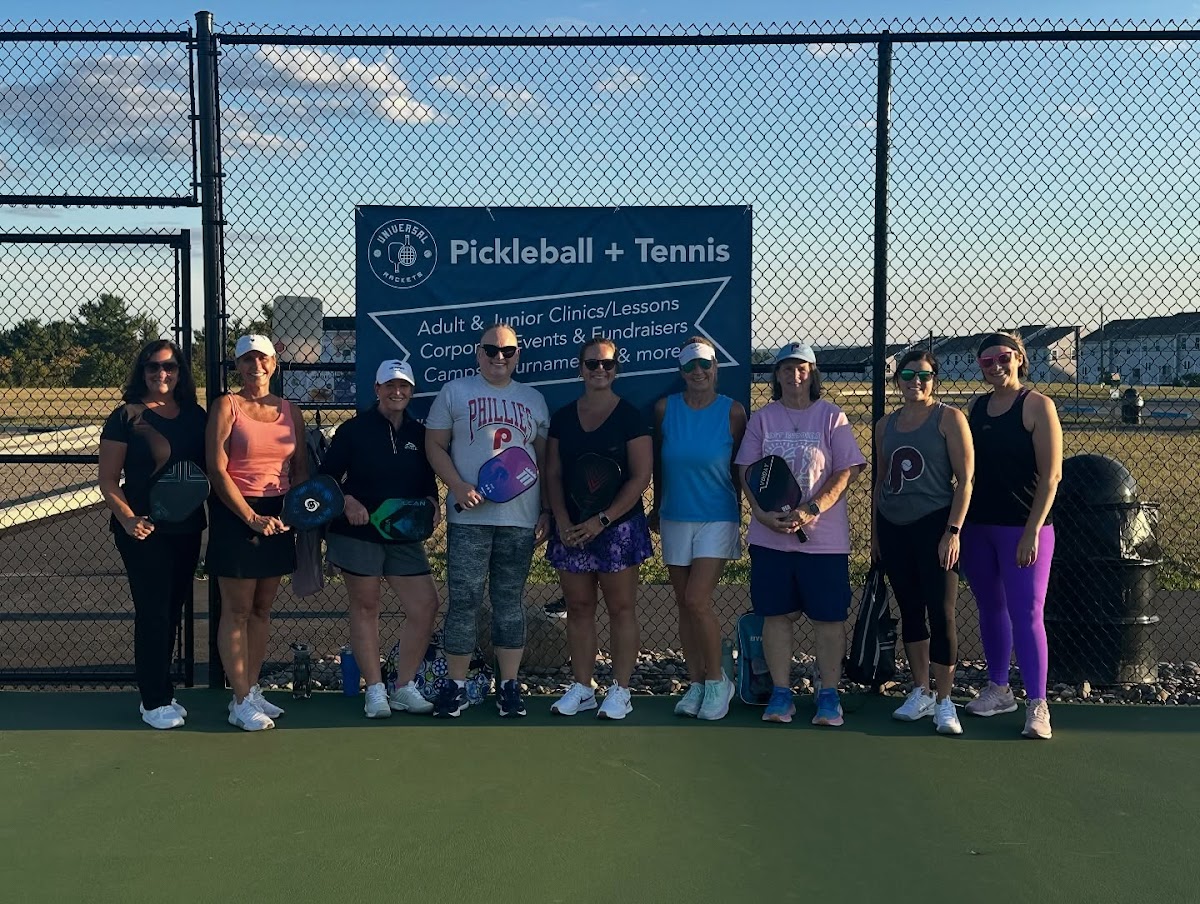
A clinic, a class and a group lesson all mean the same thing at Universal Rackets: a coach, a group of players at the same level, and a set day and time every week. Beginner clinics run as a series of five to six weekly sessions, so you learn with the same people each week and nobody is the only new person in the group. Sessions run at township parks and community centers across the Philadelphia suburbs, plus La Salle and Fox Chase inside the city.
What a beginner clinic covers, week by week
Every coach and group moves a little differently, so treat this as the typical shape of a series rather than a promise about the exact order. By the last week you can play a real game, keep score and understand why you won or lost the point.
- Week one: the grip, the rules and your first points. How to hold the paddle, the ready position, and the rules that matter most: the serve goes diagonally, the ball bounces once on each side before anyone volleys, and you cannot step into the kitchen to hit a ball out of the air. Then you play. Most people hit their first rally within twenty minutes.
- Week two: the serve and the return. The serve is underhand and simpler than it looks. The goal is to make it in, deep, every time. The return is the same idea: get it back, get it deep, and give yourself time to move in.
- Week three: the dink and the kitchen rule. The dink is the soft shot that lands in the kitchen, the seven foot zone on each side of the net. You learn why you cannot volley from inside the kitchen line, and why patient dinking wins more points than swinging hard.
- Week four: the third shot. After the serve and return, the serving team has to get to the net, and the third shot drop is the soft shot that lets them do it safely. It is the hardest thing in the series, so nobody expects you to master it in an hour. You just need to know what it is and why it matters.
- Week five: scoring and positioning. Pickleball scoring confuses everyone at first, because you call three numbers before every serve. By week five you will be calling it without thinking. You also learn where to stand with your partner and when to move up to the kitchen line together.
- Week six, where the series runs six weeks: play. Full games, rotating partners, and the coach fixing the things that are costing you points.
What to bring
Sneakers with good grip, comfortable clothes and a water bottle. That is the whole list. We provide paddles and balls at every clinic, so you can try the sport before you buy anything. If you already own a paddle, bring it. You do not need a partner. Clinics rotate partners so you play with everyone in the group, which is how a lot of our regulars met the people they now play with every week.
Which level should you pick?
The whole point of a clinic is playing with people at your speed, so the level matters. Here is how we sort it.
Beginner means you have never played, or you have played a handful of times and are still not sure of the rules. We start from the grip and the serve. This is the right choice for most people reading this page, and there is no advantage to skipping it.
Advanced beginner means you can rally, keep score and know the kitchen rule, but your shots are not consistent yet. This group spends more time on the dink, the third shot and footwork.
Intermediate means you are comfortable at the kitchen line, play regularly, and want to work on third shots, patterns and strategy. If you have to think about whether you are intermediate, you are probably advanced beginner, and that is fine.
Stuck between two levels? Choose the lower one and tell your coach on day one. Coaches move players between groups when it helps.
How registration works
Start on Find a Program, pick your town, and look for a session marked beginner. Every listing shows the dates, times, level and location before you sign up. Many locations register right on universalrackets.com. Township-run programs register through the township's own recreation page instead, and the town page links you straight there. Sessions tend to fill in the last two weeks before they start, so grab your spot early.
If it rains, we schedule a make-up session and email everyone on the roster. In winter, select locations move indoors to township gyms and community centers, and the town pages show which sessions are inside.
After the beginner series
Most people move into an advanced beginner or intermediate clinic after one or two beginner series. Repeating the beginner series once is a perfectly good choice too. Between clinics, the township courts we use are public parks, so you can practice on your own. Our guide to where to play pickleball near Philadelphia lists every court with its address.
Ready to look at dates? See our pickleball clinics page, the full list of programs near Philadelphia, or go straight to Find a Program.
Common questions
I have never played pickleball. Can I really start in a beginner clinic?
Yes. Beginner clinics are built for people who have never held a paddle. The first session covers the rules, the grip and the serve before you play any points, and most people in the group are starting from the same place.
Do I need my own paddle for pickleball lessons?
No. We provide paddles and balls at every clinic. If you decide you love the sport, your coach can tell you what to look for when you buy your own.
What is the difference between beginner, advanced beginner and intermediate?
Beginner means you have never played or have played a handful of times. Advanced beginner means you can rally and keep score but want more consistency. Intermediate means you are comfortable at the kitchen line and are working on third shots and strategy.
How do I register for a beginner pickleball clinic near Philadelphia?
Pick your town on universalrackets.com and choose a beginner session. Many locations register right on our site. Township-run programs register through the township's own recreation page, and the town page links you straight there.